Perspective
Survivability in Numbers
A Nature-Inspired Solution for the Future of Global Shipping
For centuries, global shipping has pursued one objective: move more cargo with fewer, larger ships. This strategy has delivered extraordinary economies of scale, but it has also created an unintended consequence. Global trade has become increasingly dependent on a small number of critical vessels and a handful of maritime chokepoints.
Today, the Strait of Hormuz, Suez Canal, Strait of Malacca, Bab el-Mandeb, and Panama Canal form the critical arteries of global commerce. Together, they enable the movement of much of the world’s energy, raw materials, and manufactured goods. When any one of these corridors is disrupted, whether by accidents, extreme weather, infrastructure constraints, or other unexpected events, the consequences ripple across global supply chains through higher costs, delays, and uncertainty.
Nature Already Solved This
If you look closely enough, you will realise that most of the problems we face in today’s world already have solutions in nature.
Schools of fish, flocks of birds, ant colonies, turtles hatching together on the same beach, and bee hives do not rely on a single dominant individual. Their resilience comes from survivability in numbers: thousands of independent units working together as one intelligent system. If one member is lost, the system adapts and continues. We believe the challenges around critical chokepoints in shipping can be resolved with the same approach.
RISE: Resilient Intelligent Shipping Ecosystem
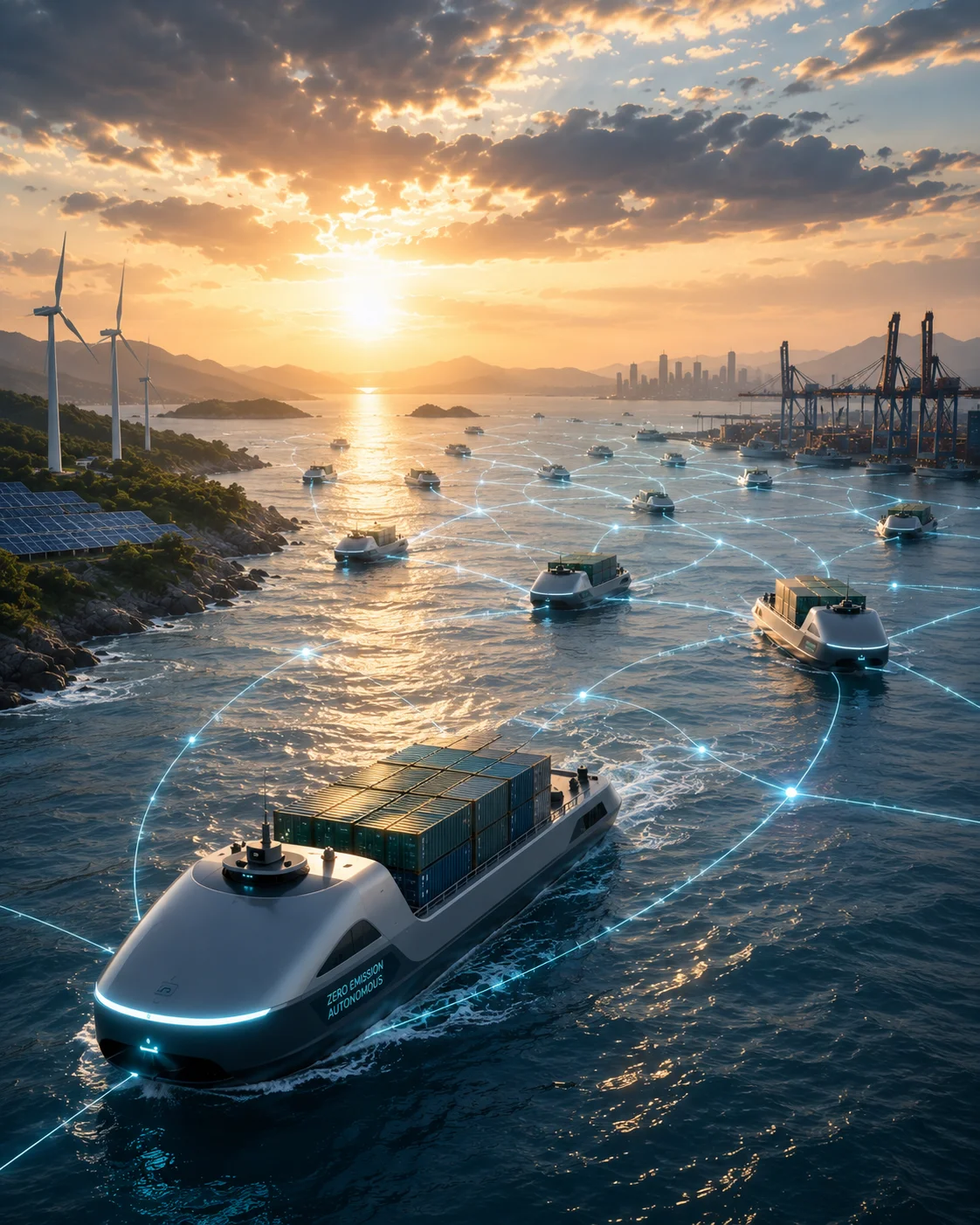
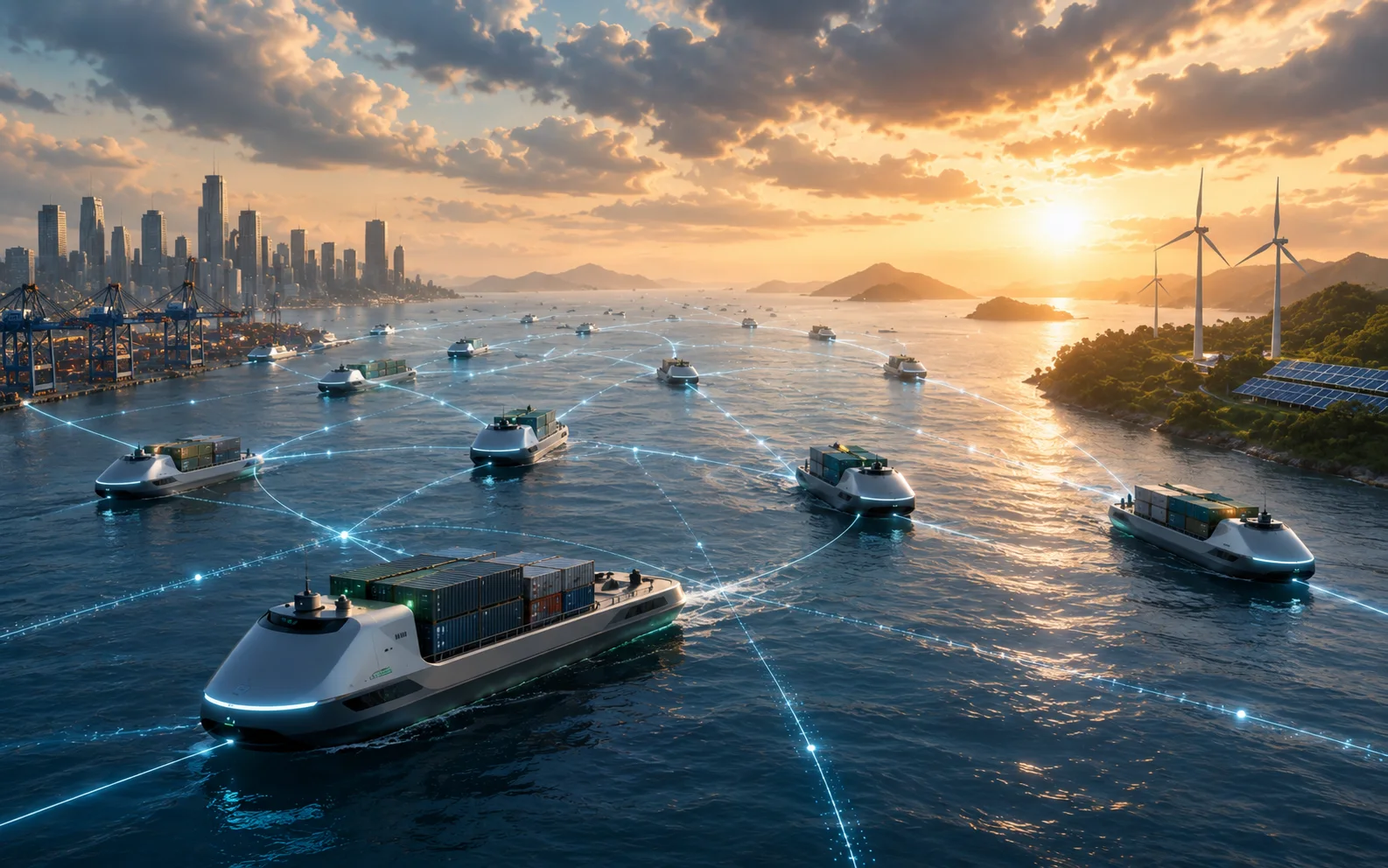
Imagine replacing dependence on a small number of ultra-large cargo vessels with a connected network of hundreds, or even thousands, of autonomous electric cargo boats. Each vessel carries only a fraction of the total cargo while operating as part of an AI-managed fleet that continuously optimizes routes, redistributes cargo, and adapts to changing conditions in real time.
This transforms shipping from a centralized system into a distributed network where no single vessel represents a critical point of failure. But the opportunity extends far beyond resilience.
One Innovation, Two Problems Solved
International shipping currently produces around one billion tonnes of CO₂ each year, roughly 3% of global greenhouse gas emissions. By combining distributed logistics with electric propulsion, next-generation batteries, and AI route optimization, the same system designed to improve resilience could also accelerate maritime decarbonization.
For the first time, one innovation has the potential to solve two of the industry’s greatest challenges at once:
- Resilience. Global supply chains that keep operating despite disruptions.
- Decarbonization. A lower carbon footprint for maritime transport, through cleaner, smarter, autonomous vessels.
Perhaps the most significant shift is economic. For decades, sustainability has often been viewed as an additional cost. But with solutions designed intelligently, resilience and decarbonization become competitive advantages. Cleaner vessels can lower fuel and future carbon-compliance costs, while distributed autonomous fleets reduce operational risk, improve network flexibility, and minimize the financial impact of disruptions. The result is a future in which the environmentally responsible solution is also the financially attractive one. We explore this idea further in The Future Is Not a Compromise.
The Time to RISE
Nature has spent millions of years refining resilient systems. The next generation of global shipping may not be defined by building ever-larger ships, but by building smarter, cleaner, and more adaptive networks.
As with any change, the industry will face many challenges: ports, cargo handling, and more. Today’s shipping industry is built for scale. That is its strength, and also its greatest weakness. To survive in a new age, it must adapt.
Sometimes the strongest system isn’t the biggest. It’s the one that never stops moving. The time has come for the shipping industry to RISE again.