Climate
The Impending Water Crisis
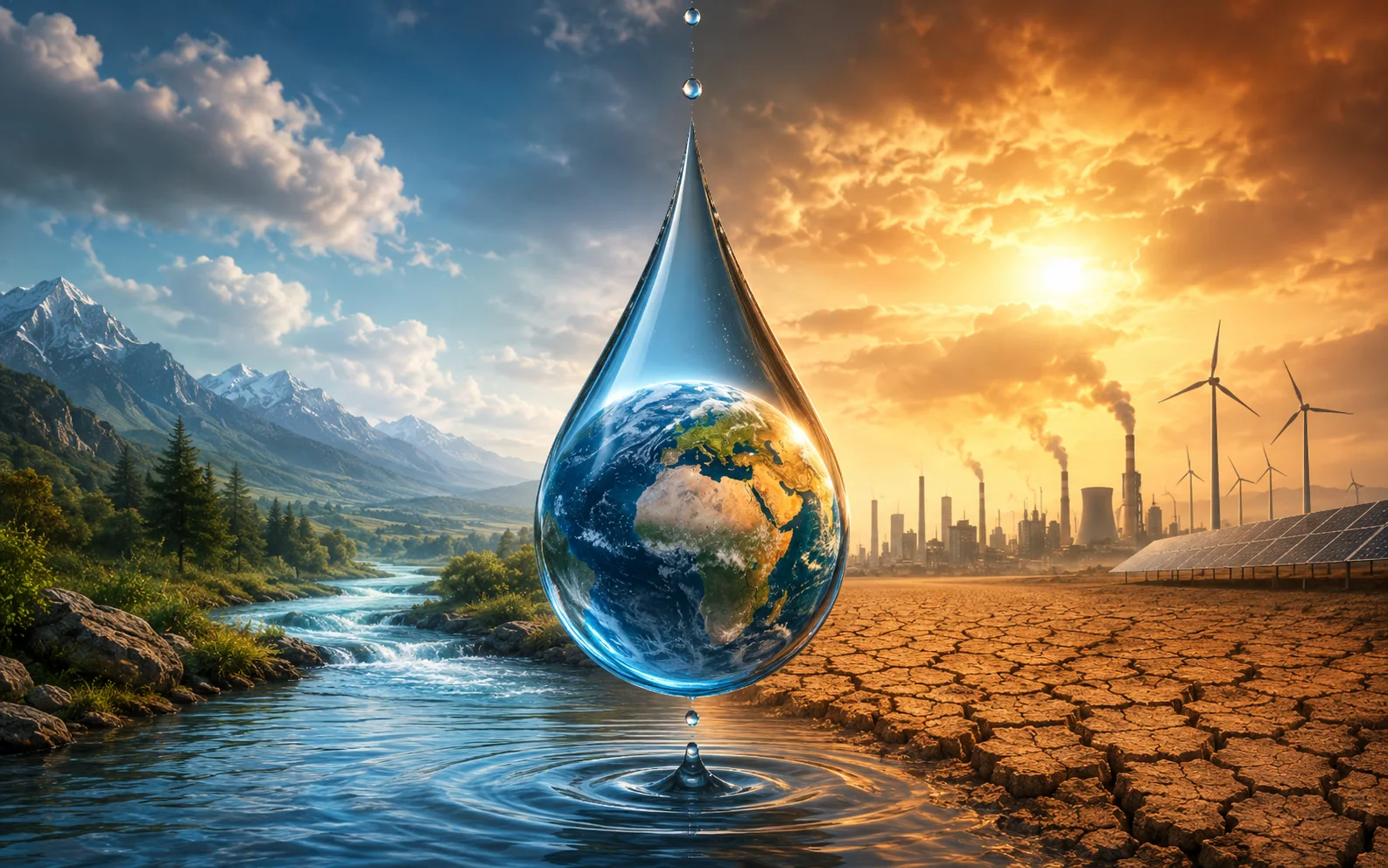
The Heart of the Global Climate Problem
The global water crisis is often seen as a shortage of freshwater. In reality, it is the result of three interconnected systems, water, energy and climate, that are in an accelerating downward cycle toward our doom. Understanding these connections is essential if we are to solve the problem.
We Can Almost Never Run Out of Water
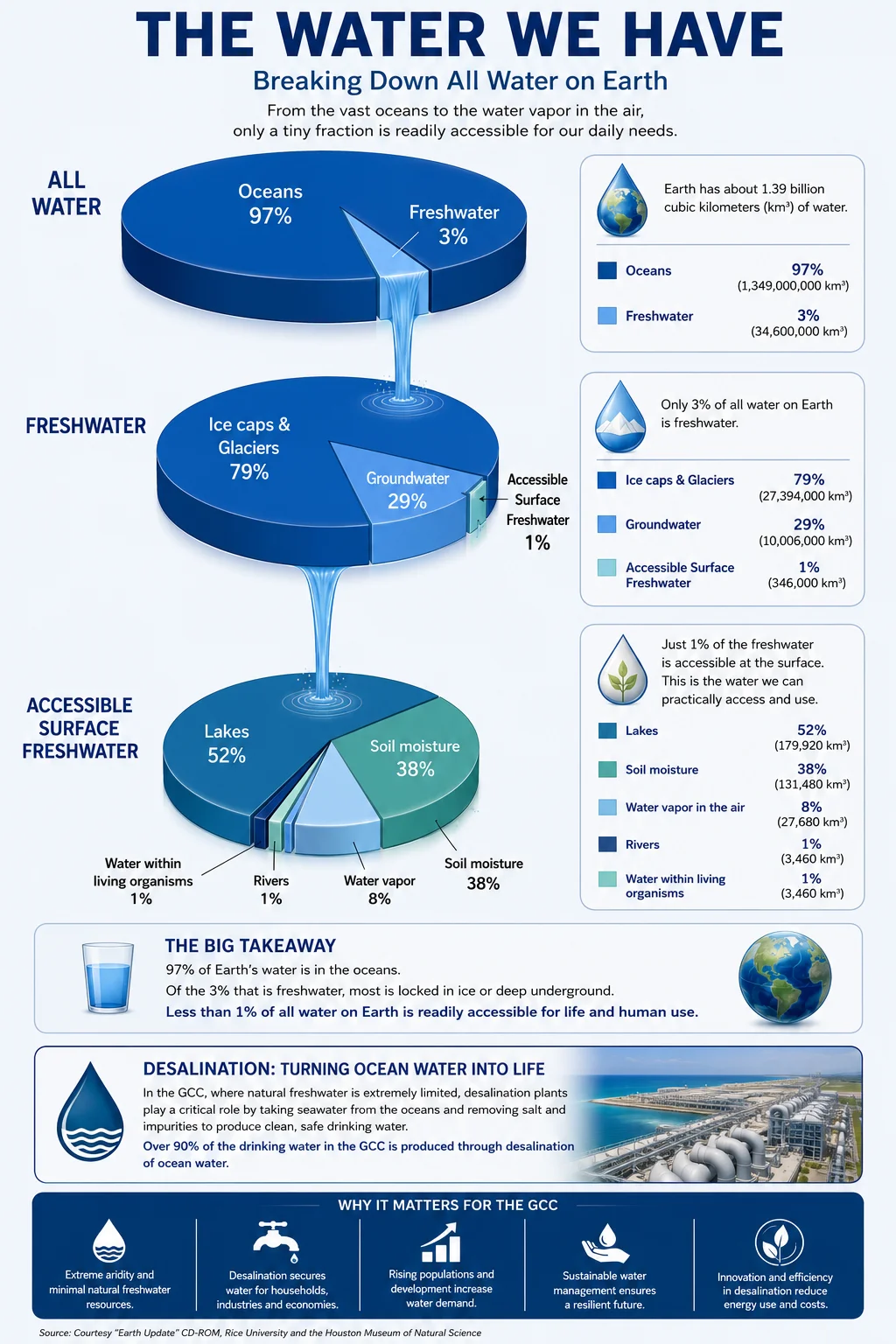
Earth holds approximately 1.39 billion km³ of water, but 97% is saltwater. Of the remaining 3% freshwater, almost all is locked away in glaciers or underground aquifers. Only a tiny fraction exists as accessible lakes, rivers, soil moisture and atmospheric water vapor. Civilization therefore depends on an incredibly small portion of Earth’s total water.
Every Drop Has an Energy Cost
As freshwater becomes scarcer, we must extract water from increasingly difficult sources. Rainwater, rivers and lakes require relatively little energy. Groundwater requires more. Wastewater recycling requires advanced treatment. Seawater desalination is among the most energy-intensive methods of producing freshwater.
For the GCC, this reality is especially important. With limited natural freshwater resources, desalination supplies most municipal drinking water, effectively converting energy into water. Water security has therefore become an energy challenge.
Water Stress Is Increasing
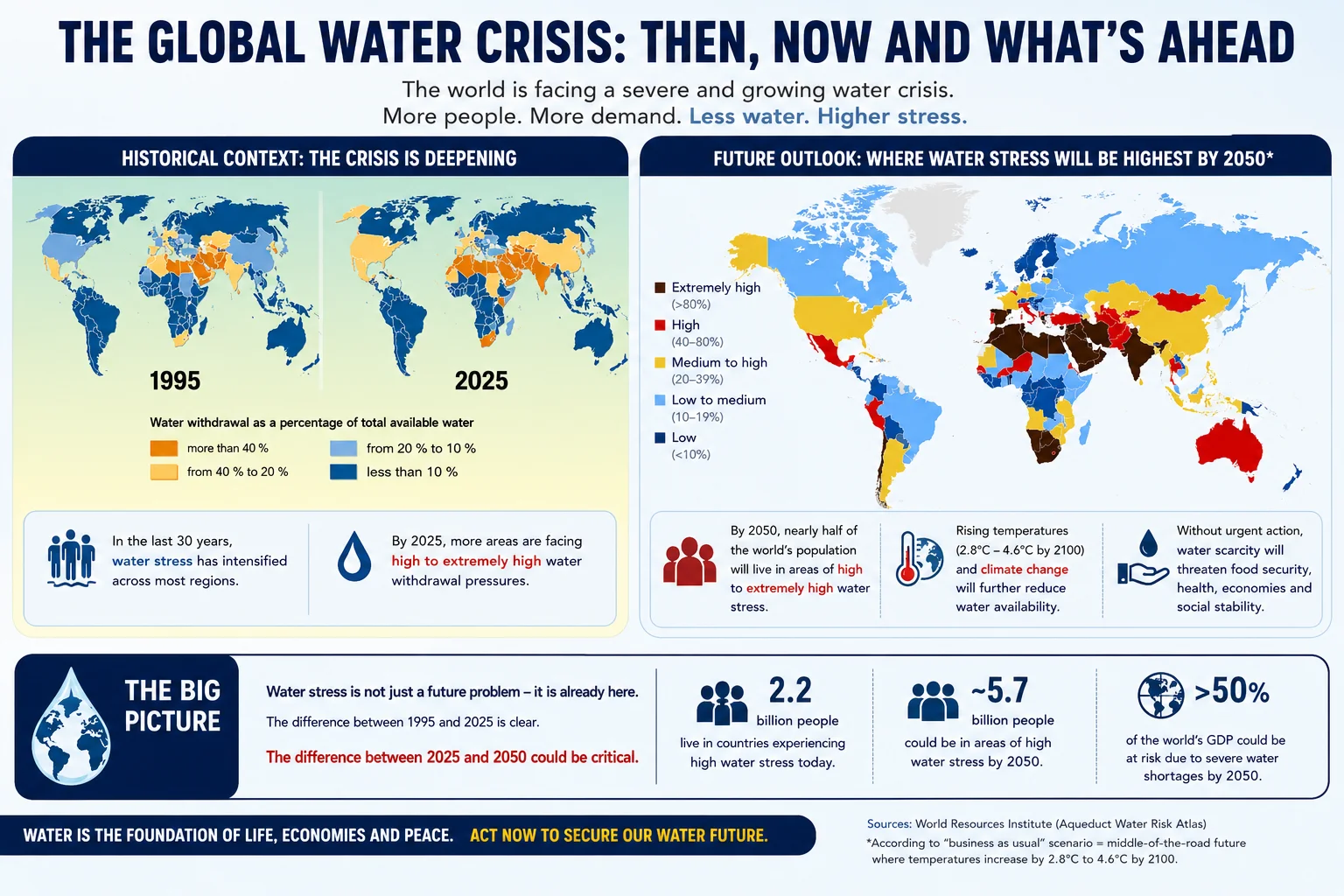
Over the past three decades, water stress has expanded across much of the Middle East, North Africa, South Asia and parts of Australia. Current projections indicate that by 2050, nearly half of the world’s population could live in regions experiencing high or extremely high water stress. Population growth, rising living standards and climate change are increasing demand while reducing reliable water availability.
The Hidden Driver Behind the Water Crisis
The water crisis is not driven by water alone. Human activities release carbon dioxide (CO₂), which warms the planet. As temperatures rise, evaporation from oceans, lakes, rivers and soils increases. A warmer atmosphere can hold approximately 7% more water vapor for every 1°C of warming. Water vapor is itself a powerful greenhouse gas, so this additional moisture amplifies the warming that CO₂ initiated. This is known as the water vapor feedback: one of the strongest amplifying processes in Earth’s climate system.
The relationship can be summarized as follows:
Higher CO₂ emissions → Higher temperatures → More evaporation → More atmospheric water vapor → More heat trapped → Greater water stress → Higher demand for desalination → Higher energy consumption → More CO₂ emissions
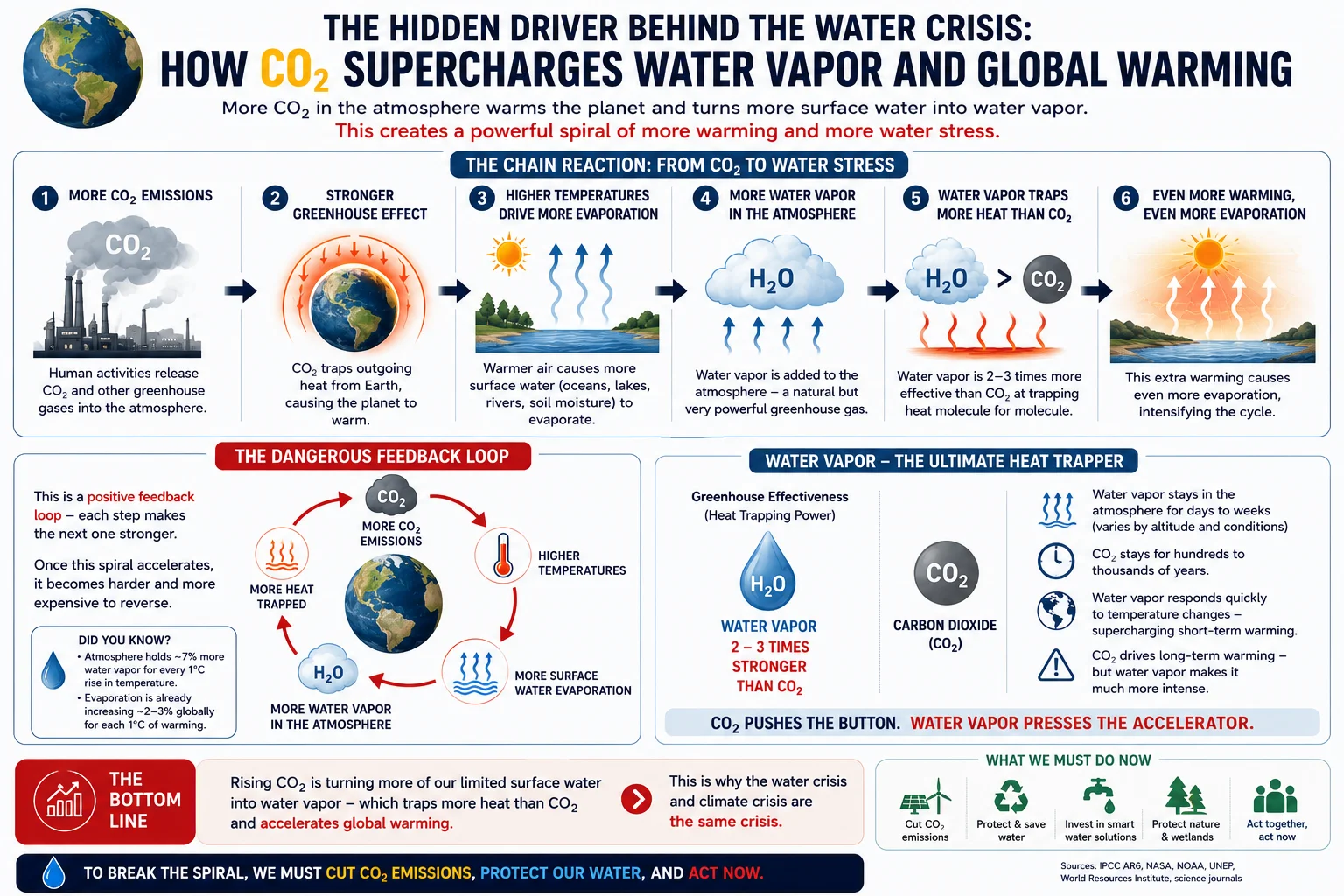
Unless the energy used for water production is decarbonized, the cycle can never be broken.
The Nexus
The water crisis is no longer simply about water scarcity. It is the intersection of climate change, energy demand and freshwater security. Countries that successfully integrate these three systems will be better positioned to ensure food security, economic resilience and sustainable development. Every drop of water has an energy cost. Every unit of energy has a climate impact. Understanding this nexus is the key to solving the global water crisis.
The water crisis is at the heart of everything else. This should be one of the first problems we fix.