Help Accelerate Nature's Design
29 July 2026
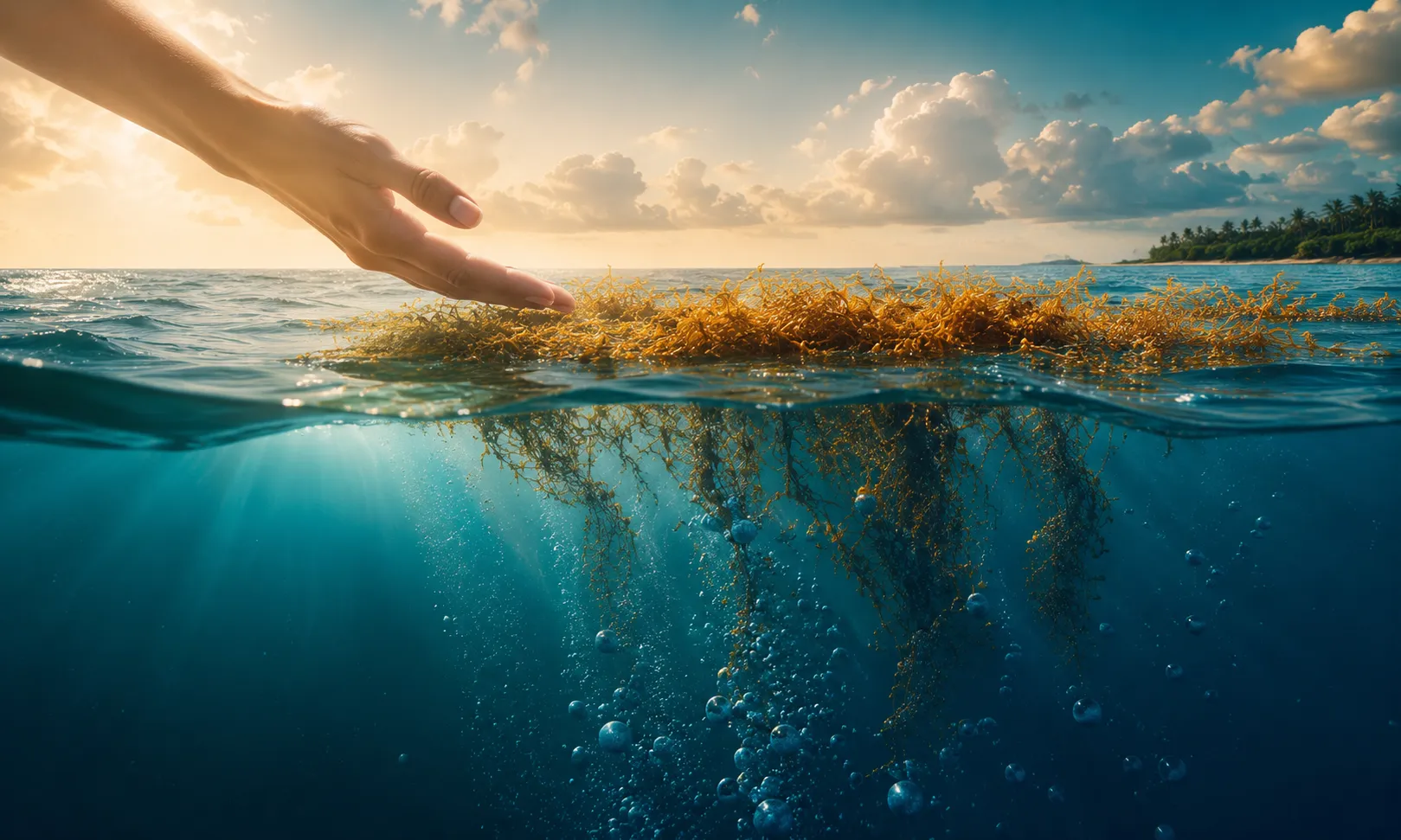
Is it possible to give nature a helping hand to accelerate this process?
The Opportunity
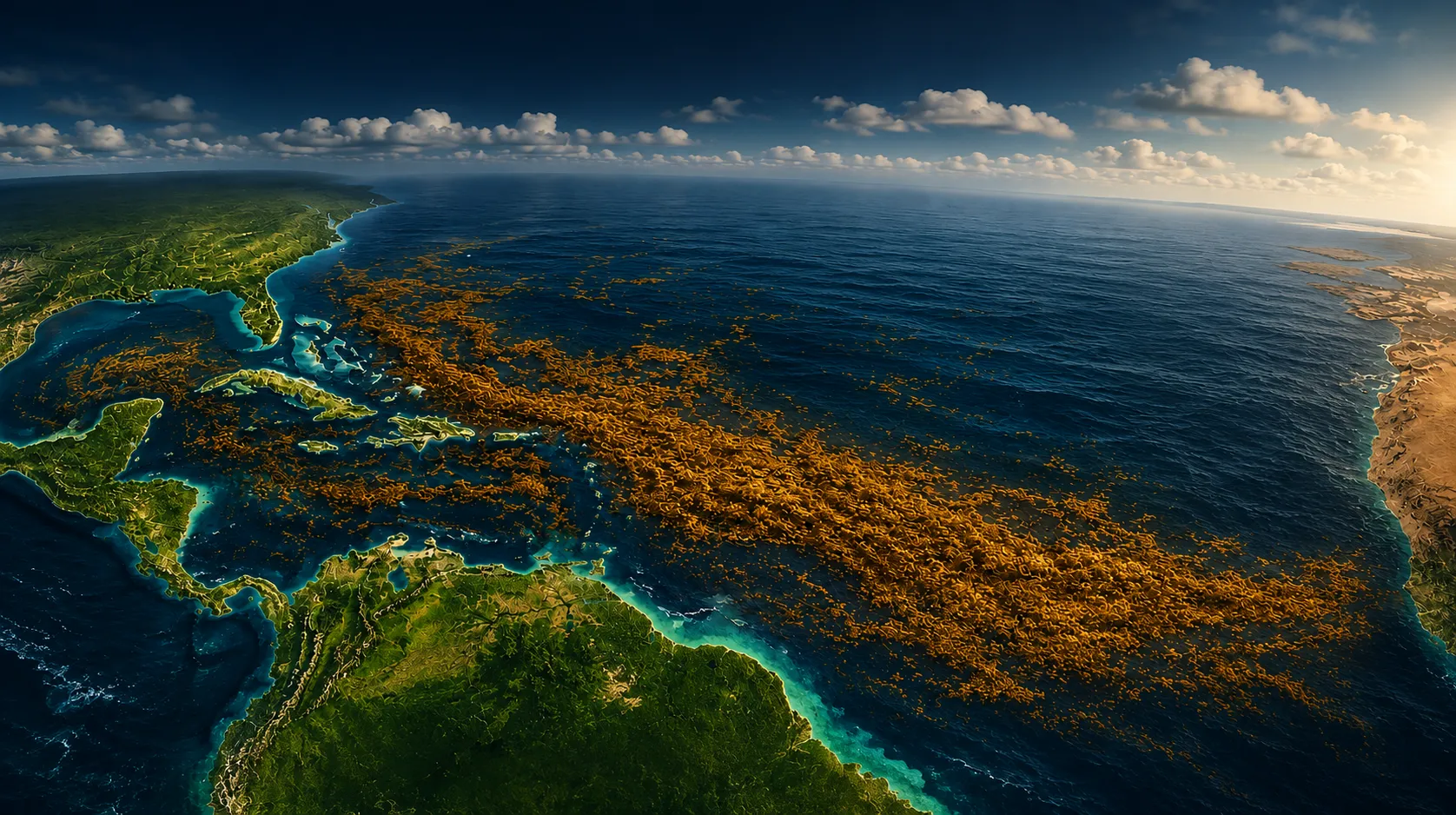
The Great Atlantic Sargassum Belt demonstrates nature's remarkable ability to capture atmospheric carbon on a massive scale. At its peak, the belt stores an estimated 4 million tonnes of CO₂ in living biomass, while its continuous growth is estimated to fix approximately 8–17 million tonnes of CO₂ each year through photosynthesis. Beyond the seaweed itself, the ecosystem supports marine life, nutrient cycling and the biological carbon pump, potentially increasing the transfer of carbon into the deep ocean. Understanding and responsibly enhancing this naturally occurring process presents a significant opportunity to complement global carbon-removal efforts while protecting coastal communities and marine biodiversity.
The Problem
While the Great Atlantic Sargassum Belt provides important ecological benefits offshore, millions of tonnes eventually wash ashore each year, creating significant environmental, social and economic challenges. Thick accumulations on beaches disrupt tourism, impede fishing activities, increase clean-up costs and affect coastal ecosystems, including turtle nesting sites and seagrass habitats. As the stranded biomass decomposes, it releases hydrogen sulphide and ammonia, producing unpleasant odours and posing potential respiratory health concerns for nearby communities. More importantly from a climate perspective, much of the carbon captured during growth is returned to the atmosphere and ocean as the seaweed decays, reducing its long-term carbon sequestration potential.
The Solution
The ideal solution is that a portion of sargassum, as it gets older and its carbon-capture capacity falls, could be sunk into long-term deep-ocean carbon storage before it reaches coastlines. If the biomass naturally becomes waterlogged, or is combined with naturally occurring mineral materials that encourage calcification or increase its density, it may sink into deep waters where temperatures are near freezing, sunlight is absent and biological activity is far slower than at the surface. Under these conditions decomposition can be significantly slower, delaying the return of carbon to the atmosphere. Eventually most of the carbon becomes buried in deep-sea sediments, where it could remain isolated for centuries or longer.
How do we implement this?
To be continued.
Something to think about
Climate· Insights